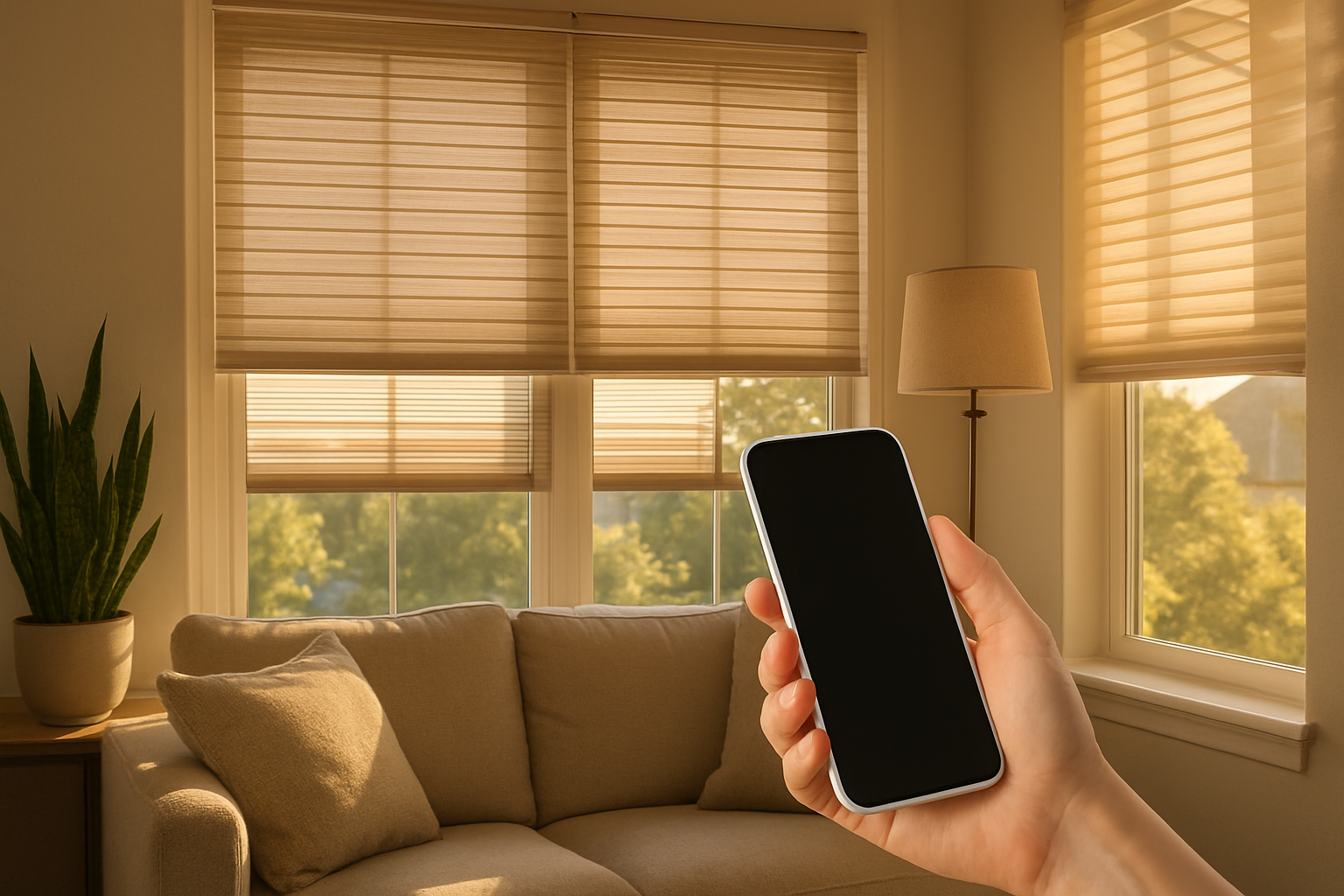
Smart window coverings can shave hundreds off your cooling bill each year—and they don’t have to be complicated. If you live in Queen Creek, AZ, where summer heat seems intent on overstaying its welcome, smart blinds are a simple way to keep your home comfortable and your HVAC working less. Here’s how they save energy, what to look for, and why Arizona Window Shutters can help make it painless.
Why smart blinds actually make a difference (and why you’d care)
You know what? Most homeowners think of blinds as a privacy or style choice. That’s fair—but blinds also act like the first line of defense against heat gain. When the sun hits your windows directly, your air conditioner kicks harder. Smart blinds change that equation by closing at the right times and opening when it’s cooler, so your home doesn’t become an oven.
Let me explain. In Queen Creek, the sun angle and prolonged summer temperatures mean west- and south-facing windows are prime culprits for heat gain. With automated control, you can schedule blinds to block afternoon sun without you lifting a finger. The payoff is lower energy use, longer HVAC life, and a house that actually feels pleasant—not just artificial-cool.
How smart blinds save energy — the mechanics behind the magic
Here’s the thing: not all energy savings are dramatic overnight, but they add up. Smart blinds save energy three main ways.
- Direct solar control. They reduce solar heat gain by shading windows during peak sun hours.
- Reduced HVAC cycles. Less heat indoors means the AC runs less often; that saves electricity and reduces wear.
- Smarter daylight use. By opening when it’s cooler outside, you get natural light without the heat penalty.
A few numbers help. Studies show window shading can cut cooling loads by 10–40% depending on glass type and exposure. In Arizona, that often translates to real dollars during May–September.
Which systems actually work (and which might frustrate you)
There’s a lot of tech out there—some of it brilliant, some of it barely there. Here’s a plain breakdown.
| System type | Best for | Ease of use |
|---|---|---|
| Motorized blinds with schedules | Everyday homeowners who want set-and-forget | Easy |
| Sensor-driven systems (light/temp) | People who want adaptive control | Medium |
| Full home automation (Z-Wave/Zigbee) | Smart-home enthusiasts | Advanced |
Motorized blinds with schedules are the sweet spot for most Queen Creek households. You set a few rules—close in the late afternoon on west windows, open in the morning—and the system runs. Sensor systems adjust to changing clouds and sudden sun, which is neat but sometimes overreacts. Full automation integrates with thermostats (think Nest) and voice assistants (Alexa, Google Home), which is powerful—if you’re into that tech.
You might read about brands like Lutron, Somfy, Hunter Douglas PowerView—and those are solid names. Lutron tends to be rock-solid for reliability; Somfy has wide compatibility; Hunter Douglas mixes design with automation. Pick something that fits your lifestyle more than your gadget-envy.
A quick word about shades versus blinds (they’re not the same)
Shades and blinds both block light, but they behave differently.
- Blinds (slats that tilt): Great for precise light control and blocking glare.
- Shades (fabric or cellular): Better for insulation and lowering heat transfer.
If you want the best energy performance, cellular shades (honeycomb shades) are often the top pick because they trap air and boost window R-value. But if you need glare control in a home office, motorized blinds that tilt give you more flexibility.
Costs, payback, and what you’ll probably spend
Here’s what homeowners ask first: “How much does it cost?” Honest answer: it depends.
- Basic motorized blinds/shades (per window): $200–$600
- Premium systems with integrations: $600–$1,500+
- Whole-home installs: Varies widely; contractors typically quote per window and labor
Think of it like buying a new appliance. You’ll pay more upfront than manual blinds, but savings on cooling, plus comfort and convenience, can pay back the price over a few years—especially in a place like Queen Creek where AC bills are high. Also, some utility companies (check APS or local programs) sometimes offer rebates for energy-efficient window upgrades—worth checking before buying.
How to set them up so you actually save money (not just look cool)
This is where people trip up: beautiful automated blinds mean nothing if they’re scheduled badly. Here are practical tips.
- East windows: Open in morning, close by late morning to block heat.
- South exposure: Use partial closure to let diffused light in while blocking direct rays.
- West windows: Close in the afternoon—these cause the biggest heat spikes.
- Night settings: Open during cool nights to vent heat if you like natural air.
Combine smart blinds with a smart thermostat and you’ll see the most dramatic savings. The thermostat reduces cooling when blinds are closed and increases when the house is shaded—synergy.
Quick ROI example — yes, a little math (but painless)
Let’s say your average monthly cooling bill is $150 during summer and smart blinds reduce energy use by 15%.
150 x 0.15 = $22.50 saved per month.
Over a 5-month hot season: $112.50 saved.
If you install motorized shades for five key windows at $400 each, that’s $2,000. At current savings, the payback looks long—but remember: the 15% figure is conservative for well-placed shades, and many homeowners see higher reductions when combining shades, attic insulation, and good HVAC tuning. Plus, comfort and reduced wear on the AC count too. Not everything that saves you money reads out on the energy bill right away.
Common concerns (battery life, privacy, internet outages—we’ll cover them)
People worry: What if the power goes out? What if the internet drops? What about privacy?
- Battery models: Many motorized blinds run on rechargeable batteries. They’re easy to swap and often last months.
- Manual override: Most systems let you lift or lower blinds manually if needed.
- Local schedules: The best systems run on internal schedules; cloud connectivity isn’t required for basic automation.
- Security: Stick with reputable brands and use secure Wi‑Fi; encryption is standard on modern controllers.
Yes, it feels odd: you’re using technology to simplify life, yet you might worry it adds complexity. That contradiction is normal. The trick is choosing systems that do most work locally, not constantly through the cloud.
Seasonal care, maintenance, and local tips for Queen Creek homeowners
Arizona has monsoons, dust, and UV that will test any window covering.
- Dust more often: A quick vacuum or soft brush keeps motors from working harder.
- UV protection: Over time, fabrics fade. Choose UV-resistant Materials.
- Windy days: Secure exterior shades; interior blinds aren’t a factor but exterior ones need fastening.
- Professional tuning: Have motors checked every few years—cheap insurance for long life.
And yes, shading helps during monsoon season too—keeping interiors cooler prevents sudden AC overload when humidity spikes.
Small table for quick comparison (energy, convenience, price)
| Feature | Energy Savings | Convenience |
|---|---|---|
| Cellular shades | High | Medium |
| Motorized blinds | Medium | High |
| Sensor-driven systems | Variable | High |
Use this as a cheat sheet when you’re comparing quotes. Cellular shades for insulation; motorized blinds for daily convenience; sensors for adaptive response.
Ready to make a smart choice for your home?
If you live in Queen Creek, AZ and you’re serious about cutting cooling costs and making your home comfier, this is for you. Arizona Window Shutters helps homeowners pick the right mix—whether that’s a few key windows with cellular shades or a whole-house motorized system that talks to your thermostat. We’ll look at sun paths, window orientation, and your daily routine, then recommend practical setups that deliver real savings.
Want to talk numbers or schedule a free, no-pressure in-home consultation? Call us at 480-470-5641 or click Request a Free Quote and we’ll get back to you. You don’t have to wrestle with the heat alone—let’s make your home smarter and more comfortable, with less fuss and more results.