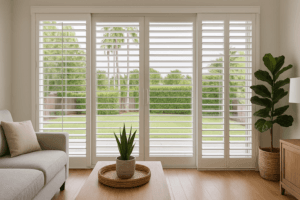
If you’ve got big windows in your Queen Creek home, you already know they’re a feature—sometimes a blessing, sometimes a headache (hello, afternoon glare). Choosing the right treatment matters: it affects light, cooling bills, and how your living room feels. Below are clear, homeowner-friendly picks for Large Window Shutters that work well in our Arizona heat and desert light.
Why shutters make sense for large windows (yes, really)
Shutters are more than pretty panels. They offer privacy, shade, and real control over light—without the noise or maintenance of heavy drapes. For big windows, shutters give structure; they break up a wall of glass into something you can manage, not just endure.
Here’s the thing: big windows can make a room feel open, but they also bring heat and glare. Shutters let you tune the light—soft and warm in the morning, shaded in the harsh afternoon. And honestly, they look more timeless than most blinds.
Quick picks: which shutter types work best for large windows?
Not every shutter suits every opening. Some fold away, some split into tiers, and others give you a single, clean panel. Below are the top contenders for Queen Creek homes, with straight talk about when each shines.
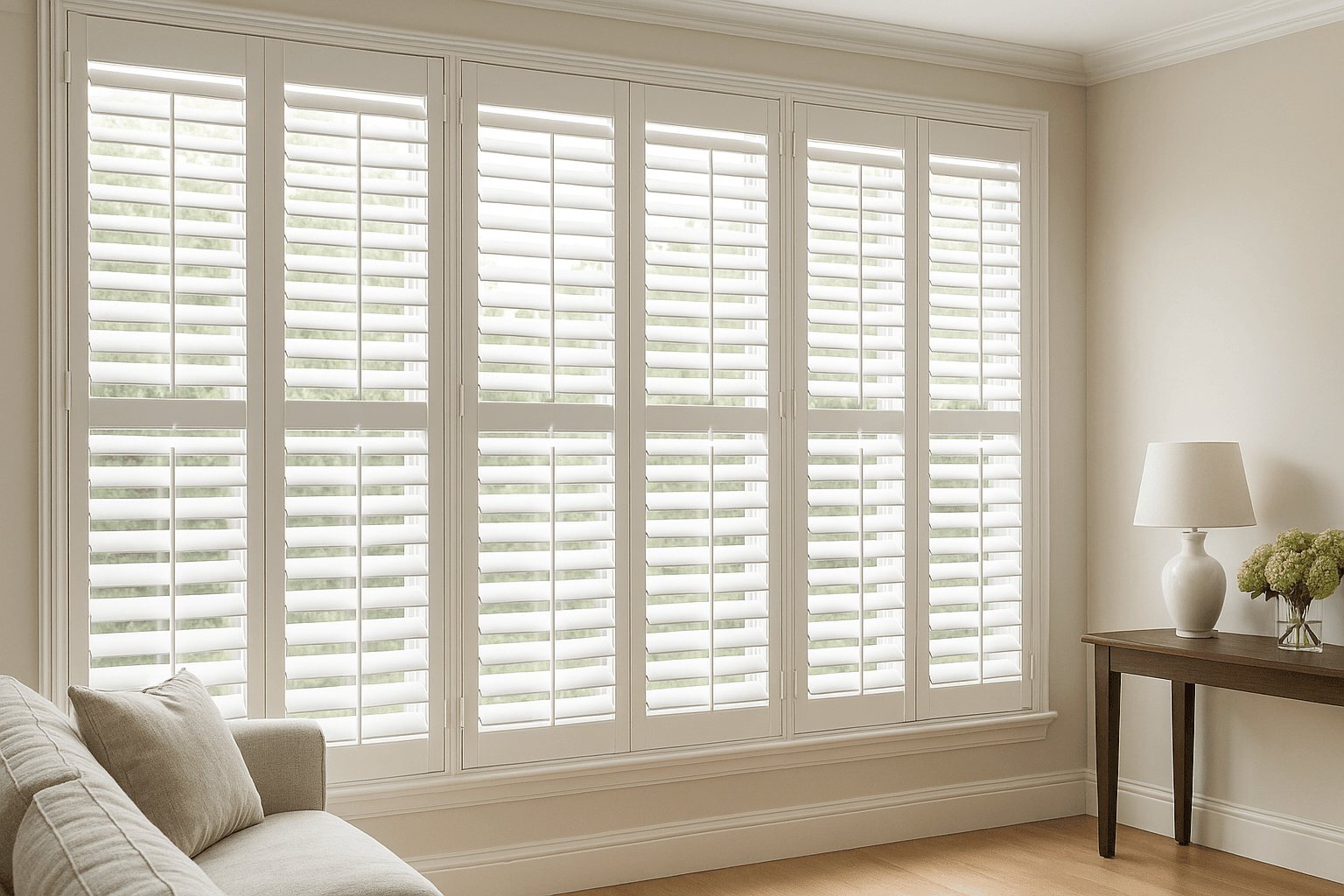
Plantation shutters — the classic favorite
- Why pick them: Deep louvers (2.5”–4.5”) are perfect for controlling light without blocking the view.
- Material options: Natural basswood for warmth; engineered composites for wet rooms or sun-heavy walls.
- Good for: Living rooms, dining rooms, large picture windows.
Tier-on-tier shutters — flexibility for the win
- Why pick them: You can open the top for light and keep the bottom closed for privacy.
- Good for: Front windows, bedrooms—anywhere you want mixed privacy and daylight.
Panel or track-mounted shutters — when the window is huge
- Why pick them: Sliding or folding panels cover wide expanses cleanly; they stack out of the way.
- Good for: Floor-to-ceiling windows, sliding glass doors, patio openings.
Bi-fold and multi-fold shutters — practical and neat
- Why pick them: They fold compactly to reveal the whole view but still offer a sturdy, shutter look.
- Good for: Large French windows, balcony doors.
A simple comparison table (because yes, visual helps)
| Shutter Type | Best For | Typical Price Range |
|---|---|---|
| Plantation (solid) | Formal rooms, living/dining | $$–$$$ |
| Tier-on-tier | Privacy + daylight balance | $$–$$$ |
| Panel/Track | Wide spans, sliders | $$$ |
| Bi-fold / Multi-fold | Large doorways, flexible openings | $$–$$$ |
(Prices vary with Materials and custom sizing—ask for a quote.)
Materials matter—don’t be fooled by looks
You can get Wood that looks gorgeous but warps in extreme sun. Or you can pick engineered materials that hold up but feel a bit less “real.” Here’s a quick breakdown.
- Basswood (real wood): Warm grain, great paint or stain, but needs good finishing and care in intense sun.
- Polymer/Composite (e.g., cellular or engineered shutters): Very stable in heat and humidity; near-zero warping, easier to clean.
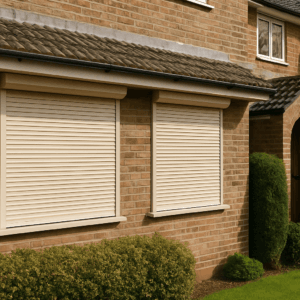
- Exterior-grade shutters (aluminum, PVC): Built for outside use—protect from UV and storms.
You know what? A wooden shutter can be the coziest thing in a room. But in Queen Creek, where the sun is relentless, a composite shutter often makes more sense long-term. Mild contradiction, I know—wood is beautiful, but composites sometimes win on practicality. Let me explain: beautiful doesn’t always mean durable here; coatings and care matter.
Sizing and installation tips—measure twice, breathe once
Large windows demand respect. Tiny errors in measurement turn a perfect shutter into a frustrating project.
- Measure the glass and the frame. Shutters can be mounted inside the frame (clean look) or outside (good if frames are uneven).
- Consider split or tiered designs. For very tall windows consider dividing panels horizontally so they’re easier to operate.
- Think about hardware and access. Will you reach the top louver? Do you need an extra hinge or a track system?
- Hire professionals for big spans. Installing wide panels requires precision; our crews use heavy-duty tracks and reinforcement to avoid sagging over time.
Here’s a practical tip: bring someone with you when choosing finishes—colors look different at noon and at dusk. Also, shutters look lighter when painted white; they feel warmer in a stained wood finish.
Style matters—match the house, or don’t (your choice)
Shutters can be invisible—or they can be the star. Your architecture helps decide.
- Modern/Minimal homes: Go with crisp white or neutral composites; large, unobtrusive louvers.
- Craftsman or Southwest styles: Natural stains, chunky frames, and hardware with character.
- Transitional homes: Mix painted frames with stained shutters—or choose a mid-tone color.
You can be bold. A dark shutter against a pale wall creates drama but also shows dust. Not a problem if you like the look and don’t mind a quick wipe now and then.
Cleaning and maintenance—easy routines that keep shutters looking sharp
Unlike fabric treatments, shutters are forgiving. Still, the Arizona dust and sun demand simple habits.
- Weekly: Light dust with a microfiber cloth or vacuum brush.
- Monthly: Wipe with a damp cloth and mild soap for composites; avoid soaking wood.
- Yearly: Inspect for loose hinges, fading, or peeling paint. Refinish or touch up as needed.
Pro tip: For sticky residues (think barbecues or outdoor kitchens), a gentle dish soap works wonders on most composites.
Energy and comfort—will shutters actually save you money?
Short answer: yes, if you choose the right type. Shutters can reflect solar heat and reduce cooling load—especially when closed during peak afternoon sun.
- Bottom line: Expect modest savings on cooling bills; the real value is comfort—less glare, more even temperatures.
- Also: shutters add curb appeal, which buyers notice. They’re an investment that ages well.
Budgeting—what to expect for Queen Creek projects
Prices vary with size, material, and installation complexity. Custom large windows add cost, but mass-produced panels often look, well, mass-produced.
- Entry-level: Basic composites for small-large windows.
- Mid-range: Painted basswood or higher-grade composites.
- High-end: Custom hardwoods, complex track systems, specialty hardware.
Think of this as an investment in your home’s comfort and resale value. A well-chosen shutter system can outlast cheap blinds by decades.
A few design mistakes I see (so you don’t make them)
- Choosing tiny louvers for huge windows. They look fussy and don’t control light as well.
- Overmatching everything. Your shutters shouldn’t be invisible; they should complement. Contrast helps.
- Skipping professional templates. For big spans, the DIY route can cost more when things don’t align.
If you’re unsure, test a sample shutter in your home. Live with it for a week. Look at it in morning and afternoon light. It’s a small thing that saves regrets.
Want a real, tailored plan? Here’s how we help
At Arizona Window Shutters, we specialize in custom solutions for Queen Creek homeowners—especially for large and unusually sized windows. We measure precisely, recommend materials built for the desert, and fit hardware that lasts. Our installers know local conditions—what holds up under our sun, wind, and occasional dust storms.
We also offer color matching, motorized openers for hard-to-reach panels, and exterior options for patio enclosures. You get a one-stop process: consultation, measurement, installation, and follow-up.
If you’re ready to make those big windows work for you—cooler, quieter, and more comfortable—give us a call at 480-470-5641 or Request a Free Quote. We’ll walk through options, show samples, and put together a plan that fits your home and budget—no pressure, just good advice.