If you’re a homeowner in Queen Creek wondering how to keep rooms cool, quiet, and truly dark when needed, this guide is for you. I’ll walk you through what room darkening Shutters are, why they matter here in the Arizona sun, and how to choose the right style without feeling overwhelmed. Little detours, helpful tips, and honest trade-offs included — because real decisions rarely happen in one sitting.
Why room darkening shutters actually matter in Queen Creek
Queen Creek isn’t subtle. Bright sun, long days, and heat that hangs around like a persistent guest — that’s our reality. So when you want afternoon naps, movie nights, or a nursery that stays cool, light control matters more than most people realize.
Here’s the thing: curtains and blinds can dim a room, sure. But properly built shutters can block more light, reduce glare on screens, and add a layer of insulation that helps your A/C breathe easier. You’ll get better privacy, fewer faded sofas, and fewer squinty mornings. Honestly, it’s the kind of upgrade that keeps giving — comfort today, resale value tomorrow.
What are room darkening shutters — in plain English
Let me explain. At their simplest, these are window coverings designed to reduce the amount of sunlight entering a room. They come in different forms:
- Louvered shutters: Slats you tilt to control light.
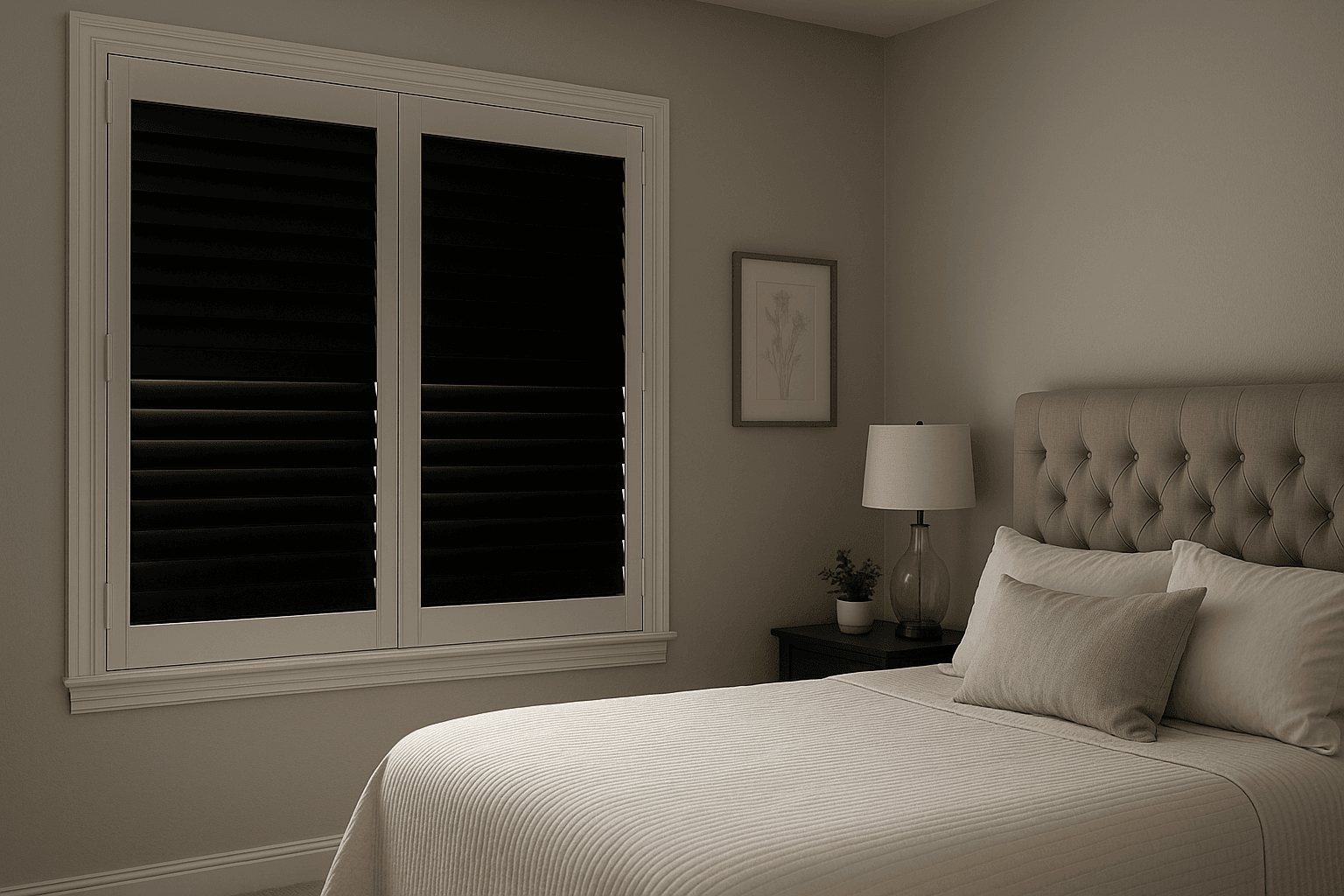
- Solid panel shutters: Flat panels that close like doors for near-total darkness.
- Track or sliding shutters: Great for large windows or sliding glass doors.
They sound straightforward, but there’s nuance. Shutters can achieve near-blackout conditions if they’re mounted carefully and paired with seals or wrap frames. And then again, sometimes even the best shutters leave a slight line of light at the edges — annoying but fixable. That contradiction is common: rigid, effective panels vs. tiny light leaks that require thoughtful installation.
Types you’ll see (and what each does best)
There’s no one-size-fits-all. Here’s a quick look at common styles and when they shine.
| Type | Light Control | Best For |
|---|---|---|
| Plantation shutters (Wood or Composite) | High — adjustable louvers | Living rooms, bedrooms, front windows |
| Solid panel shutters | Very high — near-darkness when closed | Media rooms, nurseries, bedrooms |
| Sliding/track shutters | High — covers large spans | Patio doors, floor-to-ceiling windows |
Plantation shutters are classic and breathe style. Solid panels are practical — think of them as the blackout curtains’ sturdier cousin. Sliding systems let you cover big glass expanses without a clumsy curtain.
How to pick the right shutter for your home (without going in circles)
Here’s where homeowners trip up: getting dazzled by pretty samples instead of thinking about use. So ask yourself a few simple questions first.
- What’s the room for? Bedroom or theater? Different needs.
- How big is the window? Small windows can use louvers; sliding doors need tracks.
- Do you want manual or motorized? Motorized systems (Somfy is a common brand) add convenience — and price.
- Style vs. function — which wins? You can have both, but compromises happen.
Useful tip: a laser measure (for example, a Bosch GLM) makes measurements faster and more accurate. And while some homeowners are tempted to DIY, remember that a tight fit is what gives true darkening. If you want almost-absolute blackout, plan for extra framing or weatherstripping. It’s like tailoring a suit: off-the-rack might be ok, but a good tailor makes it perfect.
Quick checklist for selection — handy and scannable
- Material: Wood for warmth; composite (like MDF) for humidity resistance.
- Finish: Painted whites reflect light; darker stains absorb heat (but look great).
- Louver size: Larger louvers = cleaner look and easier light control.
- Mounting style: Inside mount = sleeker; outside mount = more effective at darkening.
- Extras: Motorization, hidden tilt rods, magnetic catches for tight closure.
Installation: DIY temptation vs. professional peace of mind
YouTube makes a lot look easier than it is. If you’re handy, some shutter installs are doable — especially for standard windows. But Queen Creek windows often come in odd sizes or require special frames to get real darkening. A few points to consider:
- Professional install advantages: precise fit, sealing to reduce edge light, warranty, and quicker completion.
- DIY advantages: lower upfront cost, control of timing.
- Common pro add-ons: S-frame wraps, magnetic closures, and side seals for improved blackout performance.
Think of installation like putting a lid on a jar. If it’s not tight, light and air seep in. Proper sealing makes these shutters perform like true room darkeners rather than just attractive window coverings.
Maintenance and seasonal care — keep them looking sharp
Shutters are low-maintenance, but a little care goes a long way.
- Regular dusting: Microfiber cloths or a soft vacuum brush do the trick.
- Deep clean: Mild soap and water for composite; wood needs gentle cleaners.
- Check hardware: Hinges and tracks can loosen; tighten screws periodically.
- Seasonal checks: Arizona’s heat can cause expansion; inspect seals after summer and again after winter.
A quick, honest digression: people sometimes treat shutters like a set-and-forget item. That works for a while — but a little seasonal attention keeps them working and looking like new.
Costs, savings, and whether it’s worth it
Let’s talk numbers, because that’s what homeowners ultimately ask about. In Queen Creek, prices vary by material, size, and options (motorization, special frames).
- Basic plantation shutters: $250–$400 per window
- Mid-range composite shutters: $400–$700 per window
- High-end wood or motorized systems: $700+ per window
- Sliding or large custom panels: $1,000–$3,000+ depending on span
Those ranges are broad, yes — but costs scale with complexity. Now for the upside: good shutters help reduce cooling loads. In Arizona, that can shave noticeable minutes off AC runtime during peak heat. Some homeowners report lower energy bills and better indoor comfort. Also, well-chosen shutters add curb appeal and can boost resale value, which is not nothing.
A quick ROI example: save even 5% on cooling bills during hot months — that adds up over years. Check with local utilities like SRP or APS for any available rebates; programs change, but energy-efficient home improvements sometimes get incentives.
Style stuff — make your dark rooms look deliberate, not dungeon-like
You can have it both ways: serious light control and beautiful interiors. Trends right now lean toward clean, oversized louvers and neutral colors. Motorized shutters and smart-home integration are getting more common — imagine closing shutters in the afternoon with a voice command while you start the grill.
A few style notes:
- Bedrooms: Go solid panels or tight-fitting outside mounts.
- Living rooms: Plantation shutters for style and flexibility.
- Media rooms: Solid panels or layered treatments (shutters plus drapery) for total darkness and acoustics.
- Outdoor-facing rooms: Composite Materials resist Arizona sun better than natural wood.
You know what? A darkened room can feel cozy and luxurious — not like a cave. It’s about balance: keep walls light, add textures, and use shutters as a design anchor.
Real-life examples (short, relatable stories)
A Queen Creek family added solid-panel shutters to their nursery and regained sleep. The difference wasn’t dramatic at first — an extra hour of uninterrupted sleep, then another. A homeowner with a south-facing living room installed plantation shutters and cut glare so he could finally use his laptop without squinting. Small changes, big quality-of-life gains.
These stories aren’t magic. They’re choices that solve real, everyday problems — glare, heat, privacy, and comfort.
Ready to darken your rooms and sleep better?
If you want help picking the perfect system for your home in Queen Creek, we’d love to talk. At Arizona Window Shutters, we offer free on-site consultations so measurements and recommendations aren’t guesses. Call us at 480-470-5641 or Request a Free Quote today — we’ll bring samples, talk through options, and show you what true room darkening looks like. Simple. Honest. Local.