
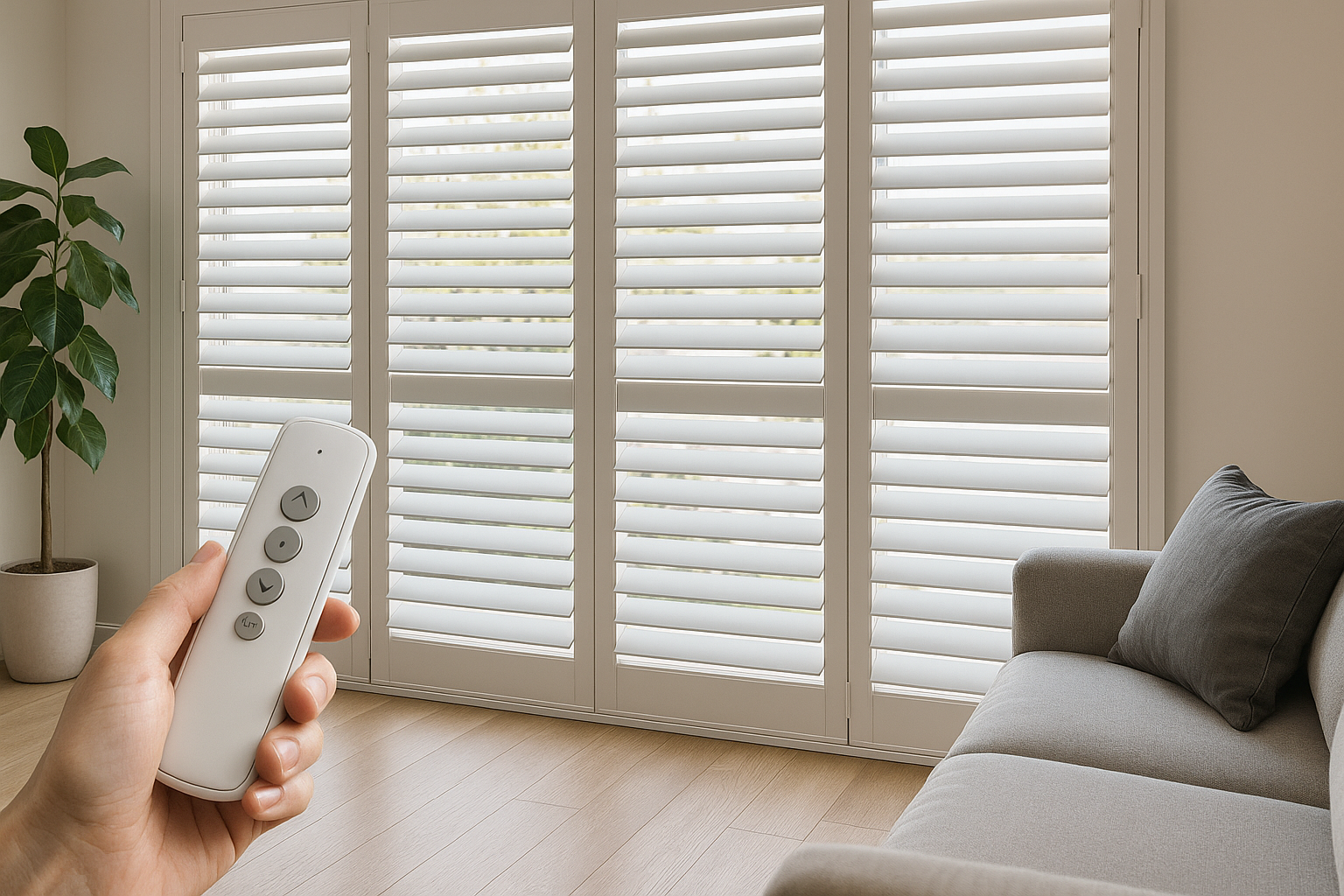
Living in Queen Creek means brutal sun, gorgeous sunsets, and a house that needs smarter shading. If you’ve been wondering whether motorized window Shutters are worth it, this guide spells out the style, the tech, and the practical stuff—without the fluff. Stick around; you might end up picturing your morning routine with shutters that close on their own.
Why Queen Creek homeowners are loving motorized shutters (and you will, too)
You know what? Arizona heat changes everything. Windows face west and suddenly your living room turns into a sauna by 3 p.m. That’s where motorized shutters come in—they’re a stylish way to manage sunlight, privacy, and temperature without having to jump up and down fiddling with cords.
- Comfort control: Set schedules so rooms stay cooler in the hottest hours; fewer midday AC cycles means lower bills.
- Sun protection: UV fading on furniture is real. Shutters filter harsh light and protect fabrics and floors.
- Privacy on demand: One tap, and the neighborhood can’t see in. Handy for early mornings or late nights.
- Curb appeal: Clean lines and a modern finish make your home pop—important if you’re thinking resale.
They’re simple, yet surprisingly technical—think of them as curtains with brains. And yes, they’re for regular homeowners who want convenience, not just tech nerds.
How they actually work (plain talk, some jargon)
Here’s the thing: motorized shutters pair a mechanical drive with a control system. The drive is the motor, the control system is the remote, app, or smart hub that tells the motor what to do.
- Motor types: Tube motors (hidden in the roller) or gearbox motors (for heavier panels). Brands like Somfy are common in the trade and reliable.
- Controls: Handheld remotes, wall switches, smartphone apps, or voice with Alexa and Google Assistant. Some systems talk over Z‑Wave, Zigbee, or Wi‑Fi.
- Sensors & automation: Light sensors, temperature sensors, and timers let shutters react on their own—close automatically during the hottest part of the day, for example.
Power options vary: hardwired to your electrical system, rechargeable battery packs, or small solar panels for off-grid convenience. Each has pros and cons—battery setups are quieter and easier to install, wiring is low-maintenance long-term, solar helps when you want green energy.
Style matters: looks, Materials, and a little desert flavor
Shutters aren’t just functional; they make a style statement. In Queen Creek, many homeowners prefer neutral tones and durable finishes that stand up to Arizona dust and sun.
- Plantation-style shutters: Classic, adjustable louvers for light control and a timeless look.
- Aluminum shutters: Durable, sleek, great for modern homes and protection.
- Polymer (PVC) shutters: Moisture and sun-resistant, mimic Wood grain without warping.
- Real wood (treated): Warm and rich, but needs more care in desert climates.
Here’s a quick comparison to help you picture it:
| Material | Best for | Queen Creek notes |
|---|---|---|
| Aluminum | Durability, modern look | Handles heat, low maintenance |
| Polymer (PVC) | Cost-effectiveness, weather-resistance | Good sun resistance, easy care |
| Real wood | Warmth, traditional style | Needs sealing for sun; high curb appeal |
Style tip: go lighter on exterior colors to reduce heat absorption and maintain a fresh look longer.
Practical benefits—money, comfort, security (yes, all three)
Let’s be blunt: you buy shutters because you want something that works day in, day out. Motorized shutters do several jobs at once.
- Energy savings: By shading windows during peak sun, you reduce cooling loads. Even modest cuts in AC use add up.
- UV defense: Keeps hardwood floors and fabrics from bleaching—your interior lasts longer.
- Security boost: Closed shutters act as a visual and physical deterrent; motorized systems can be scheduled when you’re away.
- Noise reduction: A solid shutter can dampen street noise—it’s not soundproof, but it helps.
- Accessibility: For folks with mobility issues, no more struggling with cords—just use a voice command or app.
Honestly, some of these benefits sound small until you live with them. Then you’ll wonder how you managed without scheduled shading.
Installation and upkeep—what to expect (and what you shouldn’t worry about)
Planning matters. A good install makes the difference between smooth operation and never-ending tweaks.
- Timeline: Most residential jobs take one to three days depending on window count and complexity.
- Site prep: Measurements are everything—custom panels need precise dimensions. We handle templates and fittings.
- DIY? You could install a single motorized shade if you’re handy. For whole-house setups, professionals handle wiring, calibration, and integration—faster and cleaner.
- Maintenance: Minimal. Check motor housings, wipe slats occasionally, and replace batteries every few years if you use battery motors.
Mild contradiction: they’re built to be low-maintenance, yet you’ll probably find yourself enjoying the little tweaks—adjusting schedules, fine-tuning scenes. It’s a bit like owning a smart thermostat.
Smart home compatibility—make it part of the family
If your home already has smart lights or a Nest thermostat, shutters can join the party. Integration means fewer apps and more automation.
- Voice control: Most systems work with Alexa and Google. HomeKit support exists but is less universal.
- Routines: Program shutters to lower at sunset, or to rise when the morning alarm goes off—small moments, big convenience.
- Energy scenes: Combine shutters with HVAC settings for energy-efficient scenes—“away,” “vacation,” or “movie night.”
- Security mode: Some systems link to security hubs so shutters close on alarm triggers—privacy fast.
Analogy: Think of motorized shutters as a reliable team player in your smart home orchestra—sometimes they lead, sometimes they harmonize.
Cost breakdown—what you’ll pay and why (realistic ranges)
Numbers help, and I’ll be straight with you: prices vary. Factors include material, motor quality, control options, and how many windows you outfit.
- Basic (single window, battery motor): $400–$800
- Mid-range (custom fit, wired motor, app control): $800–$1,500 per window
- Premium (custom, integrated automation, high-end materials): $1,500–$3,000+ per window
Here’s a simple table to compare:
| Tier | Typical features | Approx. price/window |
|---|---|---|
| Basic | Battery motor, simple remote | $400–$800 |
| Mid | Wired motor, app control, better finish | $800–$1,500 |
| Premium | High-grade motor, full smart integration, luxury materials | $1,500+ |
Keep in mind: grouping windows and centralizing controls can reduce per-window costs. Also, energy savings and increased curb appeal can partially offset upfront costs over time.
Common homeowner questions (short and useful answers)
Q: How long do motorized shutters last?
A: With quality motors and routine checks, 10–20 years is typical for the mechanical components; slats and frames can last much longer.
Q: What happens in a power outage?
A: Many systems have manual overrides or battery backups. You’ll still be able to operate shutters manually if needed.
Q: Will shutters block my view?
A: They can, if fully closed. But adjustable louvers let you control light and sightlines—think filtered views rather than blocked ones.
Q: Are motorized shutters noisy?
A: Modern motors are surprisingly quiet—usually a soft hum. Some premium models are whisper-quiet.
Q: Do they need permits in Queen Creek?
A: Typically not for interior shutters; exterior alterations sometimes require HOA approval. We can help with local guidelines.
Thinking about installation timing? Seasons matter (Arizona flavor)
You might assume summer is the best time to install—after all, you notice the heat most then. But honestly, spring or fall is ideal. Install before the intense summer sun hits so your AC savings start immediately. Also, scheduling is easier outside peak summer service times.
And yes, monsoon season is a thing—exterior shutters should be locked down for storms, so plan accordingly.
Ready to try stylish motorized window shutters in Queen Creek?
If you’re a homeowner who wants comfort, privacy, and a modern look without fuss, motorized window shutters are worth a serious look. They blend practicality with design in a way that feels both luxurious and everyday-friendly.
Call Arizona Window Shutters at 480-470-5641 or click Request a Free Quote to set up a free, no-pressure consultation. We’ll measure, demo control options (you’ll love the app), and give plain-spoken pricing. Let’s make your home cooler, quieter, and a little smarter—one window at a time.


